Visit to Basilicas in Italy
Saint Peter’s Basilica
St. Louis de Montfort Pilgrimage to St Peter’s Basilica at the Vatican Rome
St. Louis de Montfort, born Louis-Marie Grignion in 1673 in France, was a zealous missionary priest whose profound spirituality and tireless efforts left a lasting impact on the Catholic Church. His journey to Rome and the recognition of his contributions through his statue in St. Peter’s Basilica are significant aspects of his legacy.
St. Louis de Montfort’s Visit to Rome
In 1706, facing opposition and difficulties in his missionary work within France, St. Louis de Montfort embarked on a pilgrimage to Rome. This arduous journey, undertaken on foot and covering hundreds of miles, was driven by his desire to seek guidance and clarification from the highest authority in the Church – Pope Clement XI. He was struggling with the direction of his ministry, as some bishops had rebuffed his efforts and he experienced various challenges in his work with the poor and in preaching missions.
Upon his arrival in Rome, Montfort was granted a private audience with Pope Clement XI. During this meeting, he poured out his heart to the Holy Father, explaining his desire to be a missionary, possibly even in foreign lands like Canada or Japan. However, Pope Clement XI, recognizing Montfort’s true vocation and perceiving his God-given zeal, appointed him as an Apostolic Missionary for France. The Pope instructed him that there was ample scope for his evangelistic work within his own country. This papal mandate provided Montfort with the authority and validation he needed to continue his demanding and often controversial ministry. He returned to France with renewed vigor and a clear sense of purpose.
The Presence of His Statue in St. Peter’s Basilica
St. Louis de Montfort’s statue is indeed present in St. Peter’s Basilica in Rome, a testament to his profound influence and his role as a founder of religious congregations. The basilica features 39 statues of “Founder Saints” in the niches of its nave, transepts, and tribune. These statues commemorate individuals who established religious orders or institutes, highlighting their significant contributions to the Church’s spiritual and apostolic life.
St. Louis de Montfort’s statue, sculpted by Giacomo Parisini in 1948, is located in the upper niche of the Left (South) Nave. Its presence signifies his recognition as a pivotal figure in the history of Catholic religious life, specifically for founding the following congregations:
- The Company of Mary (Montfort Missionaries – SMM): This congregation of priests and brothers is dedicated to preaching missions and retreats, especially focusing on Montfort’s Marian spirituality and devotion to Jesus through Mary.
- The Daughters of Wisdom (Filles de la Sagesse – FdC): Co-founded with Blessed Marie Louise Trichet, this congregation of sisters is dedicated to caring for the sick, poor, and educating girls, often in hospitals and schools.
- The Brothers of St. Gabriel (Brothers of Christian Instruction of St. Gabriel – SG): This congregation of brothers is primarily involved in education and various apostolic works, particularly among the youth and the poor.
The placement of his statue among other esteemed founders like St. Ignatius of Loyola, St. Benedict, and St. Vincent de Paul, underscores the lasting impact of his charisma and his role in inspiring and establishing religious families that continue to serve the Church globally. His writings, particularly “True Devotion to the Blessed Virgin,” have also profoundly influenced Marian theology and popular piety for centuries.
About St. Peter’s Basilica
St. Peter’s Basilica, known in Italian as Basilica di San Pietro in Vaticano, is a magnificent church located in Vatican City, an independent state within Rome, Italy. It stands as one of the holiest sites in Catholicism and a breathtaking masterpiece of Renaissance and Baroque architecture.
Description:
The basilica is immense, capable of holding tens of thousands of people. Its key features include:
The Façade: A grand structure with colossal columns and statues of Christ and various apostles.
The Nave: The central aisle is vast, leading towards the altar. The interior is richly decorated with marble, mosaics, and intricate details.
The Dome: Designed initially by Michelangelo and completed by others, the dome is an iconic feature of the Roman skyline and offers panoramic views of the city and Vatican City. Visitors can climb to the top.
St. Peter’s Baldachin: A monumental bronze canopy by Bernini over the high altar, marking the traditional site of St. Peter’s tomb.
Michelangelo’s Pietà: A renowned marble sculpture depicting the Virgin Mary cradling the body of Jesus.
Statue of St. Peter Enthroned: A revered bronze statue of St. Peter, with its foot worn smooth by centuries of pilgrims’ touches.
The Vatican Grottoes: Located beneath the basilica, these house the tombs of many popes and other significant figures.
History:The history of St. Peter’s
Basilica spans centuries:
Old St. Peter’s Basilica: The original basilica was built in the 4th century AD by Emperor Constantine over the believed burial site of Saint Peter. This church served for over a thousand years and was a major pilgrimage site.
Construction of the New Basilica: By the 15th century, the old basilica was in disrepair. Pope Nicholas V first conceived of a new basilica, but it was Pope Julius II who, in 1506, initiated the construction of the current St. Peter’s Basilica.
Architects and Construction: The basilica’s design and construction involved numerous prominent architects over more than 120 years, including Donato Bramante, Raphael, Michelangelo, Carlo Maderno, and Gian Lorenzo Bernini, each contributing significantly to its final form. The basilica was completed and consecrated in 1626.
Location:
St. Peter’s Basilica is located in Vatican City, west of the Tiber River and near the Janiculum Hill. Its address is Viale Vaticano, 00165 Roma RM, Italy. It is situated at the end of St. Peter’s Square (Piazza San Pietro), a vast elliptical piazza designed by Bernini that can accommodate hundreds of thousands of people.
Relevance to Catholic Faith:
St. Peter’s Basilica holds immense significance for the Catholic faith:
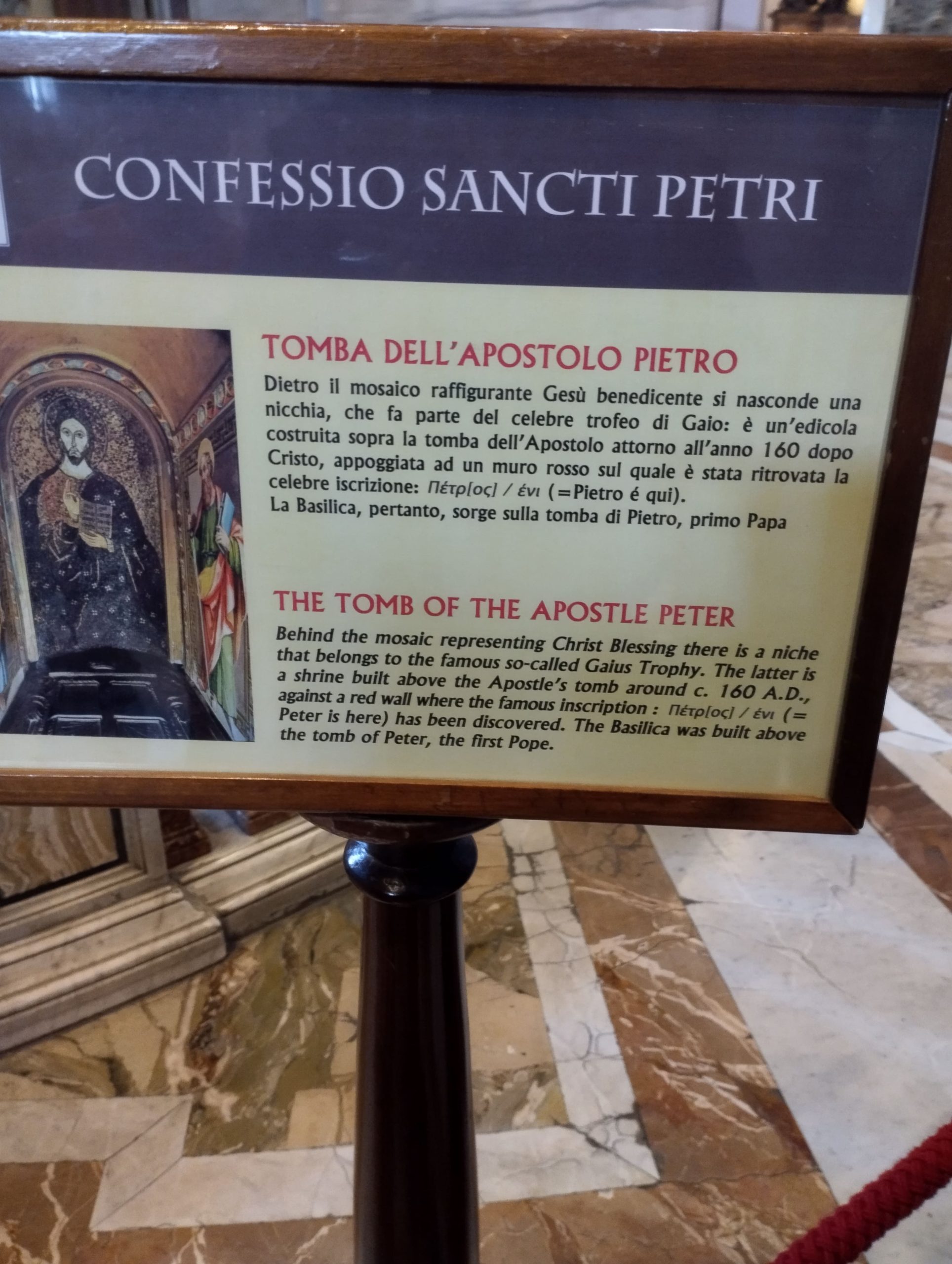
Burial Site of St. Peter: Tradition holds that the basilica is built over the tomb of Saint Peter, one of Jesus’s twelve apostles, considered the first Pope and a foundational figure of the Catholic Church. His remains are believed to lie beneath the high altar.
Symbol of the Papacy: As the burial place of St. Peter, the basilica symbolizes the continuity of the Papacy and the authority of the Bishop of Rome as the successor of Peter.
Center of Pilgrimage: For centuries, St. Peter’s Basilica has been a major pilgrimage destination for Catholics worldwide, who come to venerate St. Peter and express their faith.
Papal Liturgies: The Pope presides over many important liturgies and ceremonies in St. Peter’s Basilica or the adjoining St. Peter’s Square, drawing massive crowds of faithful.
A Symbol of the Church: The grandeur and artistic beauty of the basilica reflect the historical importance and the spiritual aspirations of the Catholic Church. It stands as a visible sign of the Church’s presence in the world.
In summary, St. Peter’s Basilica is not just an architectural marvel but a deeply significant religious site that embodies the history, tradition, and central beliefs of the Catholic Church. Its connection to St. Peter, its role in papal history, and its status as a major pilgrimage destination make it one of the most important and revered churches in Christendom.